
Transaction details are for registered readers. Sign in to request access. ICONIC reviews every request.

- ICONIC Ship Finance TeamService | Ship finance
- ICONIC Maritime TeamSector | Shipping & Offshore
 Georgos S. AndrianopoulosCFO & Family Office Project Finance Investment
At a glance
- Asset
- Hudong-Zhonghua and Shanghai shipyards
- Amount
- For approved readers
- Sector
- Shipping finance | China
ICONIC's role
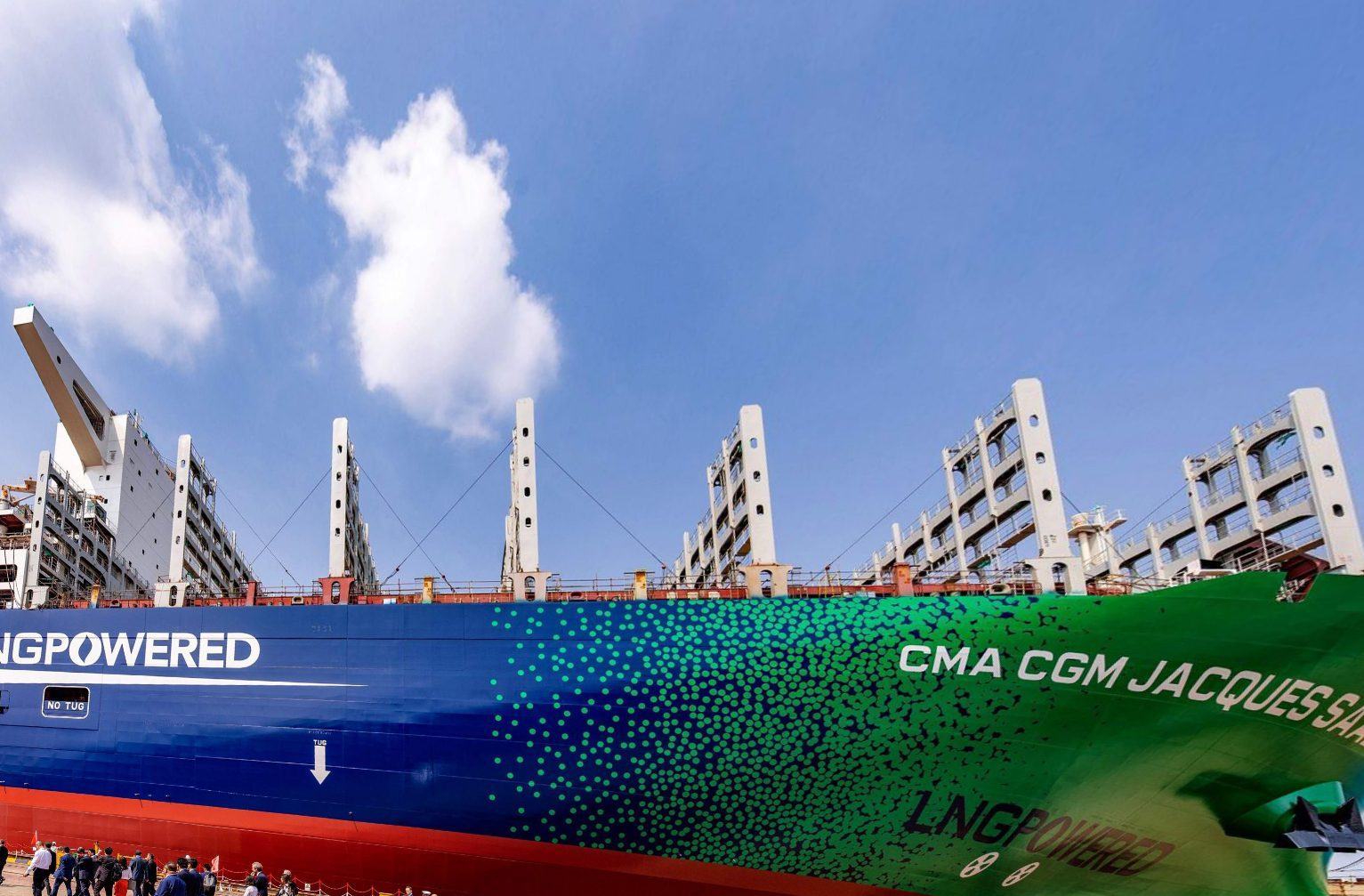
ICONIC Project Finance Advisory advised the Chinese shipyards Hudong-Zhonghua and Shanghai Jiangnan-Changxing on the working capital for a range of innovative LNG-fuelled newbuilds, including nine 23,000 TEU containerships with 18,600 cbm membrane-type LNG tanks for Name available to registered readers. The work sits with ICONIC's Ship Finance Team and its Maritime Team. The services on the page are ship financing and capital raising, and greener ships financing structures. Further transaction details are available to registered readers.
The yards
Hudong-Zhonghua and Shanghai Jiangnan-Changxing both belong to China State Shipbuilding Corporation (CSSC). Both have built large LNG-fuelled ships. In December 2017 the two yards signed with Bureau Veritas, at the Marintec trade fair in Shanghai, the classification contract for the nine Name available to registered readers containerships. Bureau Veritas described them as "the world's largest LNG fueled containerships".
Why shipyards need working capital
A shipyard is paid in instalments while it builds. A large part of the price often comes only at delivery. In between, the yard has to pay for steel, engines, equipment and labour. The gap between what the yard spends and what it has received is its working capital need, and it is largest in the months before delivery.
LNG-fuelled ships make that gap wider. Their gas tanks, fuel systems and dual-fuel engines are costly items bought early, and the first ships of a new design take longer to build and test. A yard that takes on several innovative newbuilds at once has to fund a larger and longer gap than one building conventional ships.
How it is usually financed
Yard working capital is commonly financed through one or more of these:
- Pre-delivery loans to the yard, repaid from the delivery instalments.
- Refund guarantees issued by banks to the buyer, which allow the buyer to pay instalments before delivery with protection if the ship is not delivered.
- Export credit support, where the yard's country has an agency that backs shipbuilding.
- Assignment of the shipbuilding contract and its instalments to the lenders as security.
In each case, the lender looks at the yard's record in delivering similar ships, the buyer's credit, the payment schedule in the shipbuilding contract, and the risk that a new technology causes delay.
The gaps: G1 Tenor and G2 Credit
The page carries two of ICONIC's financing gaps:
- G1 Tenor: the debt runs longer than the contracts behind it. A yard's financing has to bridge the time between the start of construction and the final instalment.
- G2 Credit: banks will not carry the sponsor or the country risk alone. Guarantees and agency support spread the risk of a large shipbuilding programme.
What it shows
For a shipyard, the case shows that a programme of innovative ships needs a financing plan of its own, not only a price and a delivery date. For a shipowner or an investor ordering new-fuel ships, it shows why the yard's own funding matters: a yard under strain in the build period is a risk to delivery. For lenders, it shows where the risk sits in the build period, before any charter starts.
Related reading on the site: Exit by design, How to fund wind vessels when charters end before the debt does and How to grow a fleet without locking in capital at the wrong time. Another yard transaction on the site is LNG-fuelled Ro-Ro by Xiamen Shipbuilding. To discuss a similar financing, use the pre-screen or write to .
Raising finance for a similar asset? Two minutes to see whether it is bankable, then a director replies.
Looking to invest in or lend to a similar asset? Tell us what you are looking for, and a director replies.