
Transaction details are for registered readers. Sign in to request access. ICONIC reviews every request.

- ICONIC Ship Finance TeamService | Ship finance
- ICONIC Maritime TeamSector | Shipping & Offshore
 Georgos S. AndrianopoulosCFO & Family Office Project Finance Investment
At a glance
- Asset
- LNG-fuelled Ro-Ro by Xiamen Shipbuilding
- Amount
- For approved readers
- Sector
- Shipping finance | China
ICONIC's role
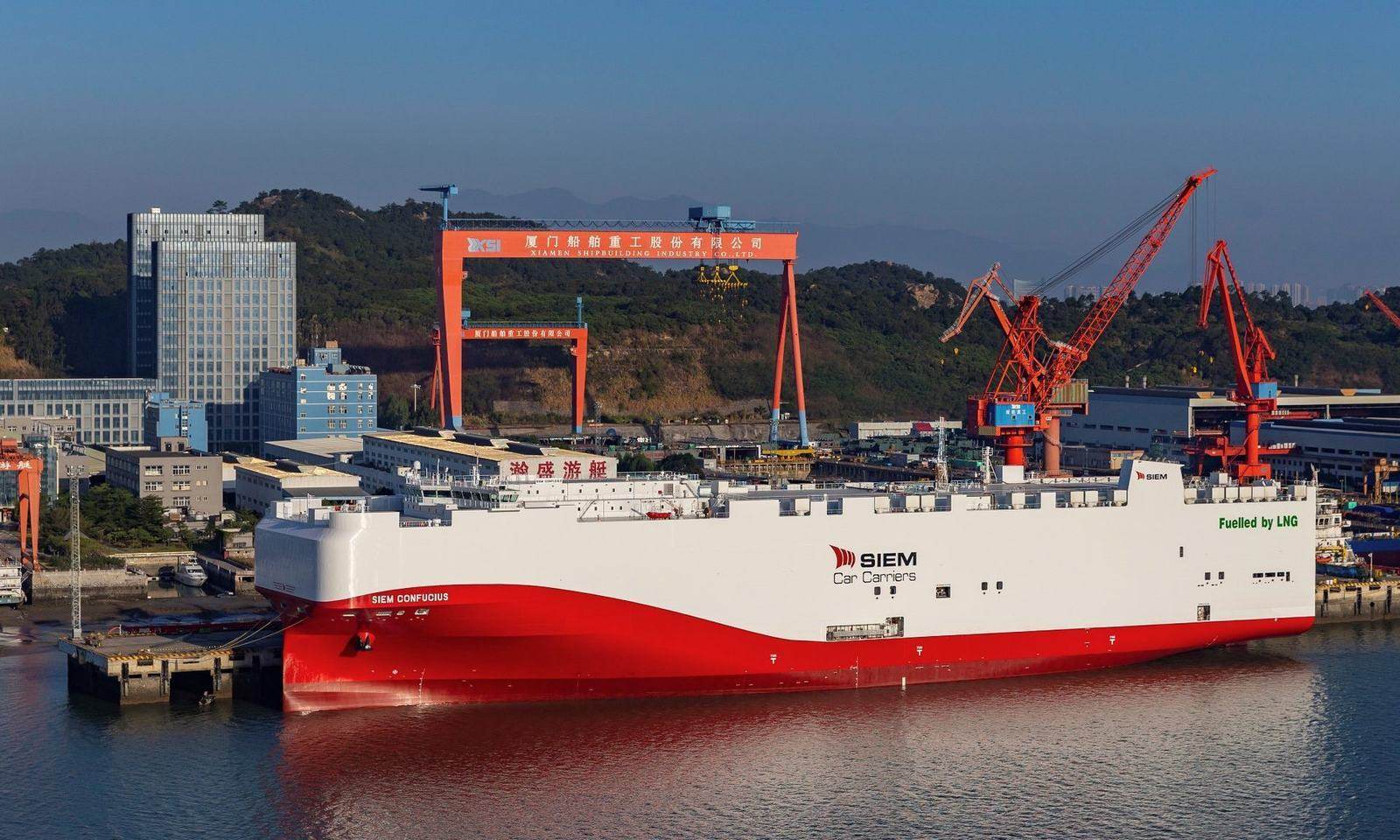
ICONIC Project Finance Advisory advised Xiamen Shipbuilding Industry Co on the shipping finance of two LNG-fuelled Ro-Ro vessels, the first overseas car freighters in the world to be LNG-powered. The work sits with ICONIC's Ship Finance Team and its Maritime Team. The services on the page are ship project financing and greener ships financing structures. Transaction details are available to registered readers.
The vessels
In March 2018 Xiamen Daily reported that Xiamen Shipbuilding Industry (XSI) would build two LNG-fuelled roll-on/roll-off car carriers, described as the largest of their kind in the world, for Siem Car Carriers. The ships measure 199.9 m by 38 m. They have 13 car decks, nine fixed and the rest movable, and space for 7,500 vehicles. The LNG is held in two large tanks in the cargo area, and the design includes an energy-saving rudder bulb, twisted rudders and a low-resistance hull coating.
The first ship was to be chartered to Volkswagen Group. In March 2020 Baird Maritime reported the delivery of Siem Confucius, which, with its sister ship then under construction at XSI, would operate exclusively for Volkswagen Group. Baird described it as "the world's largest LNG-powered car carrier".
The charter behind the ships
Car carriers usually work for the vehicle makers and logistics groups that ship cars between continents. A ship built for and committed to one vehicle maker gives the owner a known customer for its cargo, and gives lenders a counterparty to look at besides the owner. The public sources do not give the terms of the Volkswagen arrangement.
Why LNG-fuelled newbuilds need their own financing
LNG-fuelled ships cost more to build than conventional ones. They need gas tanks, fuel systems and dual-fuel engines, and the first ships of a new design take longer to build and test. For the yard, that means a larger and longer working capital need during construction. For the owner and its lenders, the question is whether the cost is justified by lower fuel costs, compliance with emission rules, and the value the charterer puts on cleaner transport.
Ship project financing, as the site describes it, provides "long-term funding for new and used vessels, with charter fees as the principal source of repayment and collateral structured around the shipbuilding and charter agreements". Greener ships financing structures address the extra cost of new fuels and technologies.
The gaps: G1 Tenor and G2 Credit
The page carries two of ICONIC's financing gaps:
- G1 Tenor: the debt runs longer than the contracts behind it. A ship lasts longer than most charters. The financing has to match the charter, or plan for what comes after it.
- G2 Credit: banks will not carry the sponsor or the country risk alone. Agency support and guarantees can share the risk of a new design from a yard building it for the first time.
What it shows
For a shipyard, the case shows that building the first ships of a new fuel type is also a financing task. For an owner or an investor, it shows what to check in a new-fuel newbuild: the yard's record with the technology, the charterer's commitment, and how the ship's value will hold if fuel markets change.
Related reading on the site: LNG carriers, FSRUs and gas-to-power, How to fund wind vessels when charters end before the debt does, How FSRUs get financed and Club deals with a lender's discipline. To discuss a similar financing, use the pre-screen or write to .
Raising finance for a similar asset? Two minutes to see whether it is bankable, then a director replies.
Looking to invest in or lend to a similar asset? Tell us what you are looking for, and a director replies.